top of page

Our all-women team carries well over 115 years of caregiving experience!
Proudly Serving Clients in Washoe, Carson City, Minden, Gardnerville and surrounding rural areas
& providing content for anyone, anywhere who can benefit from it!
or call 775-221-5922
The Journey begins here: Request a FREE meet & greet with an elder care expert!


The Question Adult Children Ask Themselves at 3am — And the Answer Nobody Gives Them
It arrives around 3am. The house is quiet, the day's distractions are gone, and some version of the same question surfaces. Am I doing enough? Is she safe right now, in that house, alone? If something happened tonight, would anyone know? Am I the only person who can hold all of this together, and what happens when I can't anymore? These questions don't have neat answers. But they deserve honest ones. Why the question comes at 3am During the day, there is motion. There ar

Robin Angel
May 122 min read


Lake Tahoe in Your 80s: Why Staying Home in Northern Nevada Isn’t a Compromise
You chose this place deliberately. The mountains. The air. The particular quality of light over the Sierra Nevada in October. The lake on a Tuesday morning when the tourists have gone home and it's just the water and the range and the sky. People don't end up in Northern Nevada accidentally. Washoe County, Carson City, the Carson Valley — Minden, Gardnerville, the wide sweep of land between the mountains and the desert — these are places people choose and stay in. The landsc
Robin Angel
May 122 min read
What Happens in the Brain During an Alzheimer’s Episode — and Why Calm Presence Is the Only Right Response
The person you love is not being difficult. Their brain is doing something specific. Understanding what it is doing changes everything about how to be with them. Alzheimer's disease does not affect the whole brain at once or in the same way. It disrupts specific functions — short-term memory formation, time and place orientation, language retrieval, executive function — while leaving others intact for much of the illness. Emotional memory often persists long after verbal mem
Robin Angel
May 122 min read


To the Daughter Who Lives Far Away
You know what your mother's voice sounds like when she's pretending she's fine. You've been hearing that voice your whole life. You know the particular cadence of it — the slightly too-bright tone, the deflection when you ask a direct question, the way she changes the subject to something she knows you'll engage with. You are not fooled. But you are five hundred miles away, and there is very little you can do with what you know. This is the specific weight of distance in el
Robin Angel
May 122 min read


Why the Last Caregiver Didn't Work Out (And What's Actually Different This Time)
You've been here before. Someone came. It didn't work. You're not sure you want to try again. This is one of the most common places families find themselves when they contact TLC. They've used another agency. The caregiver was fine at first, then different, then a new person entirely. Or they were reliable but impersonal. Or they showed up inconsistently, or communicated poorly, or simply never became the steady presence the family needed. The experience was expensive and di
Robin Angel
May 122 min read


The Hidden Cost of Being the Primary Caregiver
Nobody asks if you're okay. When someone in a family has a diagnosis — Alzheimer's, dementia, a degenerative condition that requires daily care — the attention naturally, and rightly, goes to them. The family members who show up every day, who reorganize their lives around the care schedule, who absorb the emotional weight of watching someone they love change — those people are often invisible in the story. They are the ones keeping everything running, and because they are k
Robin Angel
May 122 min read


What Sundowning Really Is — And What Actually Helps
The name is almost poetic. The reality, for the families who live through it, is harder. Sundowning is the term used to describe the increased confusion, agitation, anxiety, or behavioral changes that many people with Alzheimer's and other dementias experience in the late afternoon and early evening hours. The day has been fine — or fine enough. And then, around 4 or 5pm, something shifts. The person you love becomes frightened, or accusatory, or convinced of something that
Robin Angel
May 122 min read


The Moment You Know It's Time: A Guide for Families Who Are Still on the Fence
Most families don't miss the moment. They feel it for months before they name it. It arrives in small things. The phone call where you notice your parent is repeating a story they told you ten minutes ago. The refrigerator you opened when you visited and found mostly condiments. The moment they got turned around in a neighborhood they've lived in for thirty years. Nothing catastrophic. Nothing that would look like an emergency to anyone else. Just a quiet accumulation of sma
Robin Angel
May 122 min read
Being Known Is a Health Intervention
There is a mechanism at work in good caregiving that almost no one talks about. It is not a technique. It is not a service. It is not on any care plan. It is this: being known by another person — genuinely, continuingly known — changes the physiology of the person being known. It reduces their stress response. It increases their willingness to engage with their own care. It preserves their sense of self at the point in life when the self is most under threat. Being known is
Robin Angel
Apr 204 min read


125 Years of Showing Up
The number is 125. Well over it, actually — but 125 is where the math lands when you add up the caregiving years carried by the eight women who make up the Trained Loving Care team. It doesn’t look like much on paper. It never does. What it looks like in practice is Jacquelin Fields — who has been caregiving for over 52 years — walking into a difficult care situation and knowing exactly what to do. It looks like Tonia Axelson, who founded TLC and has spent 31 years in this
Robin Angel
Apr 204 min read


The Question That Changes Every Care Interaction: What Happened to This Person?
Tonia Axelson has been a caregiver for 31 years. In that time, she has cared for people with dementia, people at the end of life, people who were difficult, people who were funny, people who were grieving the person they used to be. The difference between caregivers who change the room and those who just complete the task is almost never about skill. It is almost always about the question they are carrying into the room with them. Most of us — trained or untrained, professi
Robin Angel
Apr 133 min read


7 Books That Changed How We Think About Caring for Someone You Love
Operational Insights for Elite Caregivers was built on 100 foundational texts covering aging, trauma, family systems, environmental psychology, and what it means to die well. Below are seven of them — the ones that contain ideas practitioners and families cite most often as having changed how they show up. Each one is available to purchase via the link below its summary. All seven are also included in our full Recommended Reading list, which covers all 100 texts organized by
Robin Angel
Apr 133 min read
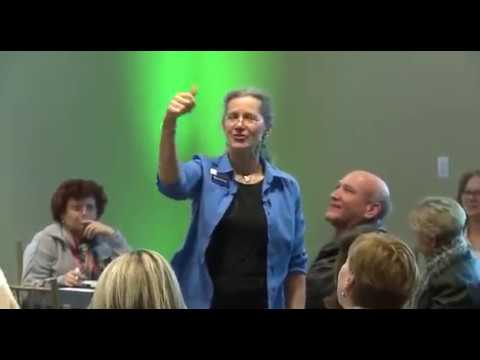
How Dementia Affects Language: Key Takeaways
Understanding Changes in Language Skills in Dementia: Insights from an Informative Video Dementia, a condition that affects millions of...
Robin Angel
Apr 17, 20233 min read


How To Recognize Signs of Dementia
Caring for Your Aging Loved One: Recognizing the Signs and Seeking the Right Elder Care As our loved ones age, it's important to be...
Robin Angel
Apr 17, 20233 min read
bottom of page